
Phase 1: Pre-Arrival Setup & IDF
The clearance process starts weeks before the ship docks. You must apply for an Import Declaration Fee (IDF) via the KRA iCMS portal. Your clearing agent will upload the vehicle's proforma invoice, engine specifications, and country of origin. Concurrently, you must ensure the vehicle has a valid certificate of roadworthiness from KEBS-appointed inspectors (QISJ in Japan/UK/UAE) to avoid a 15% local inspection penalty.
Phase 2: Customs Entry Declaration
When the ship manifest is uploaded by the shipping line (usually 48 hours before arrival), your customs agent will file a formal Customs Entry. The agent inputs the vehicle details, matches them against the CRSP database, and generates a payment slip for the custom duties. The importer must pay the duties directly to KRA via designated banks or mobile payment systems before the customs team reviews the entry.
Phase 3: Port Operations & Verification
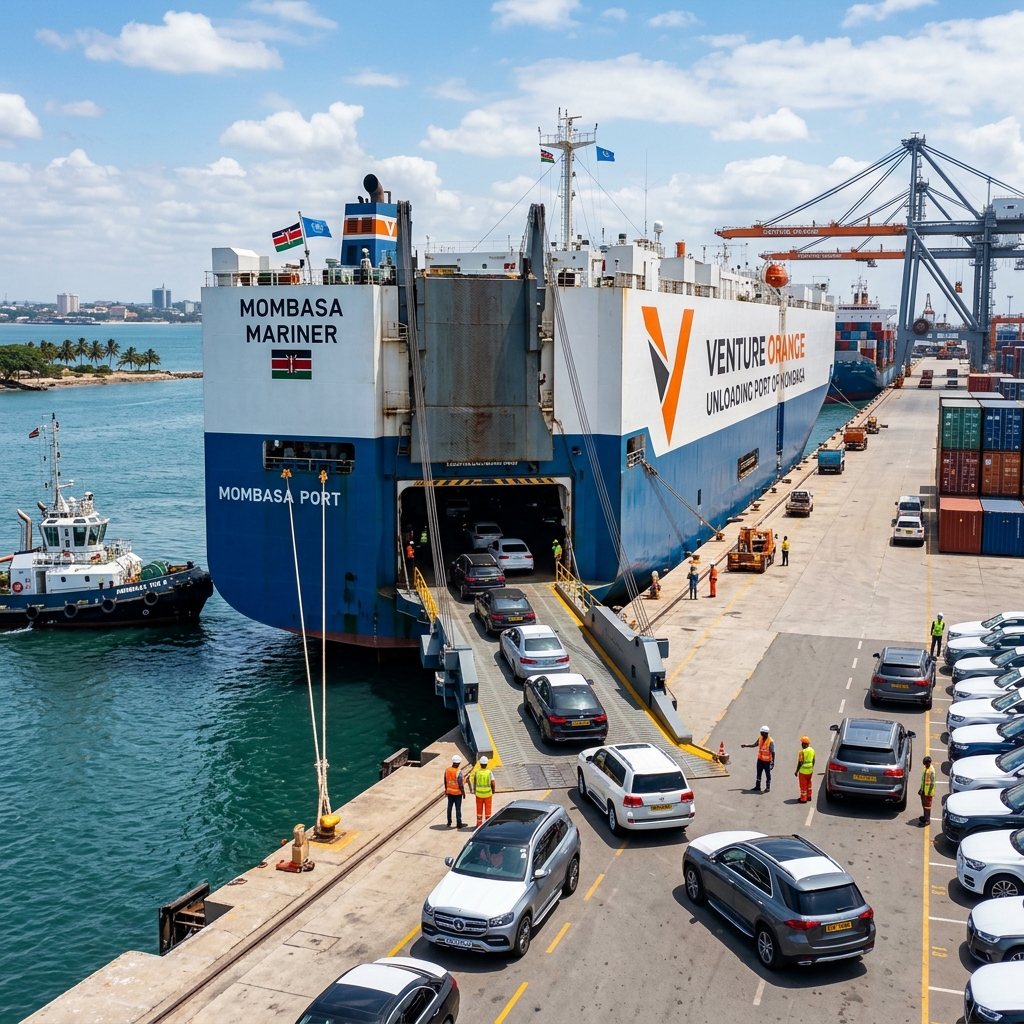
Once the container is offloaded or the Roll-On/Roll-Off (RoRo) ship discharges the vehicle, it is transferred to a Container Freight Station (CFS) outside the main port area. Here, KRA customs officers and KEBS inspectors conduct a joint physical verification. They verify the chassis number, engine number, mileage, and make sure no contraband or prohibited items are concealed inside the vehicle.
Phase 4: Paying CFS and Port Charges
After physical verification and customs approval, you must pay shipping line demurrage (if any) and Container Freight Station (CFS) handling fees. CFS fees cover the offloading, storage, and handling of your vehicle. These charges vary depending on the CFS station and how long the vehicle has remained in the yard. Prompt payment is critical to prevent storage charges from accumulating.
Phase 5: Final Release & Logbook Registration
Once all CFS payments are cleared, KRA issues a release order. The clearing agent initiates registration in the NTSA TIMS system. NTSA will allocate a local registration number (e.g., KDG...) and issue an electronic logbook. The vehicle is then fitted with local license plates, checked at the gate, and allowed to exit the CFS yard. You can now drive your vehicle on Kenyan roads!